– By Chris Cloud
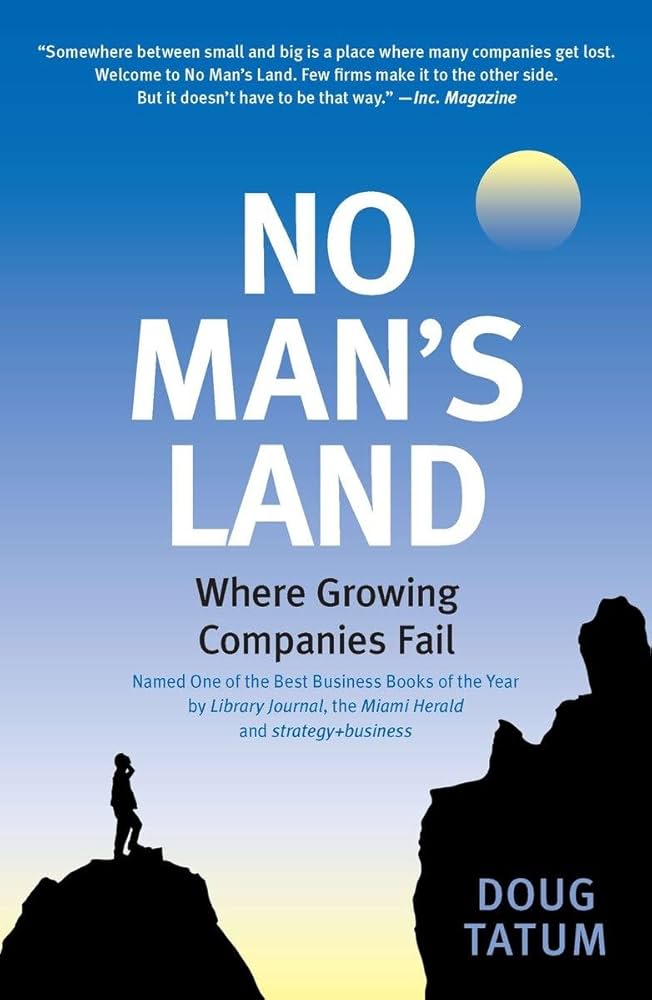
No Man’s Land explores the critical phase in the life of a growing company, where it is too big to be considered small but not yet large enough to be stable. This transitional period, referred to as “No Man’s Land,” presents unique challenges and opportunities for entrepreneurs.
I’ve written about the phase that comes before “no man’s land, I call them the “Awkward Years”.
Definition of No Man’s Land
No Man’s Land is the phase where companies typically have 20 to 100 employees and $5 million to $50 million in revenue.
It is characterized by a scale that exceeds the capacity of the original small business systems but hasn’t yet reached the stability of a large enterprise.

Challenges in No Man’s Land
Loss of Agility: Growing companies often lose the flexibility and quick decision-making capabilities that characterized their early success.
Management Gaps: The need for experienced managers can create gaps in leadership and operational effectiveness.
Market Positioning: Balancing the focus between existing customer satisfaction and exploring new market opportunities.
Financial Strain: The need for capital investment can strain finances, making cash flow management critical.
Here are some of the major statistics provided in “No Man’s Land” by Doug Tatum:
Survival Rate of Small Businesses: Approximately 70% of small businesses fail during the transition through No Man’s Land, primarily because they cannot adapt to the new demands of growth.
Revenue Plateau: Companies in No Man’s Land typically have annual revenues between $5 million and $50 million, with many experiencing significant challenges once they surpass the $10 million mark.
Employee Count: Businesses entering No Man’s Land often have 20 to 100 employees. This range creates new complexities in management, communication, and organizational structure.
Capital Needs: Companies in No Man’s Land often require 2 to 5 times more capital than they initially anticipated to sustain growth and make necessary investments in infrastructure and talent.
Market Domination: A study cited in the book shows that companies that successfully navigate No Man’s Land often dominate a specific niche, with a 60-70% market share in that segment, allowing them to maintain profitability and growth momentum.
Growth Challenges: About 50% of companies that survive No Man’s Land do so by pivoting their business models or market strategies, indicating the need for flexibility and strategic shifts during this phase.
Management Requirements: Businesses in No Man’s Land often require a significant shift in leadership, with an emphasis on professional management. It’s estimated that over 70% of businesses fail to make the necessary changes in leadership structure, contributing to their struggles in this phase.
Strategies for Navigating No Man’s Land
Strengthening Leadership: Investing in leadership development and creating a robust management team.
Focus on Core Competencies: Concentrating on what the company does best and outsourcing or delegating other tasks.
Scalability: Implementing scalable systems and processes to support growth without compromising quality.
Financial Discipline: Maintaining rigorous financial controls and seeking strategic investments.
4 M’s – Four Key Areas of Focus
-
- Market: Companies must identify and dominate a niche market to differentiate themselves and ensure sustainable growth.
- Management: The founder’s role evolves from hands-on management to strategic leadership. This includes building a competent management team to handle operational complexities.
- Model: Transitioning the business model from founder-driven to scalable systems. This often involves formalizing processes and embracing technology.
- Money: Ensuring sufficient capital to support growth. This might involve seeking external funding and managing cash flow meticulously.
The 4 M’s are basically a compressed version of the 7 D’s:
- Market is Destiny and Delight
- Management is Design and Delegation
- Model is Design, Decisions, Data, and Delight
- Money is Data and Decisions
Primary Takeaways for Entrepreneurs
No Man’s Land is a systems maturity problem. Don’t try to run a 50-person organization with 10-person instincts. The path forward is to intentionally mature the 7 D’s so all of the dimensions are aligned.
Here are some key takeaways:
Adaptability: Be prepared to evolve from a hands-on entrepreneur to a strategic leader, focusing on the big picture and long-term goals.
Focus on Niche: Dominating a specific market niche can provide the stability and revenue needed to grow sustainably.
Build a Strong Team: Surround yourself with capable managers who can handle the day-to-day operations, allowing you to focus on strategy and growth.
Formalize Processes: Transition from informal systems to scalable, efficient processes that support larger operations.
Secure Adequate Funding: Ensure you have the financial resources to support growth, including potential external investments if necessary.
If you are considering growing up and getting past the challenging years of “no man’s land”, then it’s encouraging to know that there is a proven map for navigating these hitherto uncharted waters.
Not all small businesses should be become big companies. Bigger is not necessarily better.
It’s estimated that only about 5% of all businesses make the leap to “Gazelle” (100+ employees or $50M+ Revenue). It’s wise to do some soul-searching and ask yourself why you want to grow, and whether or not you want to make the leap from small business to Gazelle. Many count the cost and decide to remain “small” on purpose. However, we believe it’s best to do that with eyes wide open, with intentionality, rather than accidentally.
CloudNINE Business Coaching specializes in helping organizations navigate No Man’s Land and go on to flourish. You don’t have to do this alone.